
Health & Wellness
I’ve Spent 50 Years Studying How the Aging Brain Works — Here’s the Simple Daily Habit That Helped My Father Stay Sharp at 97
The discovery came not from a lab — but from a quiet corner of a Kyoto community centre.

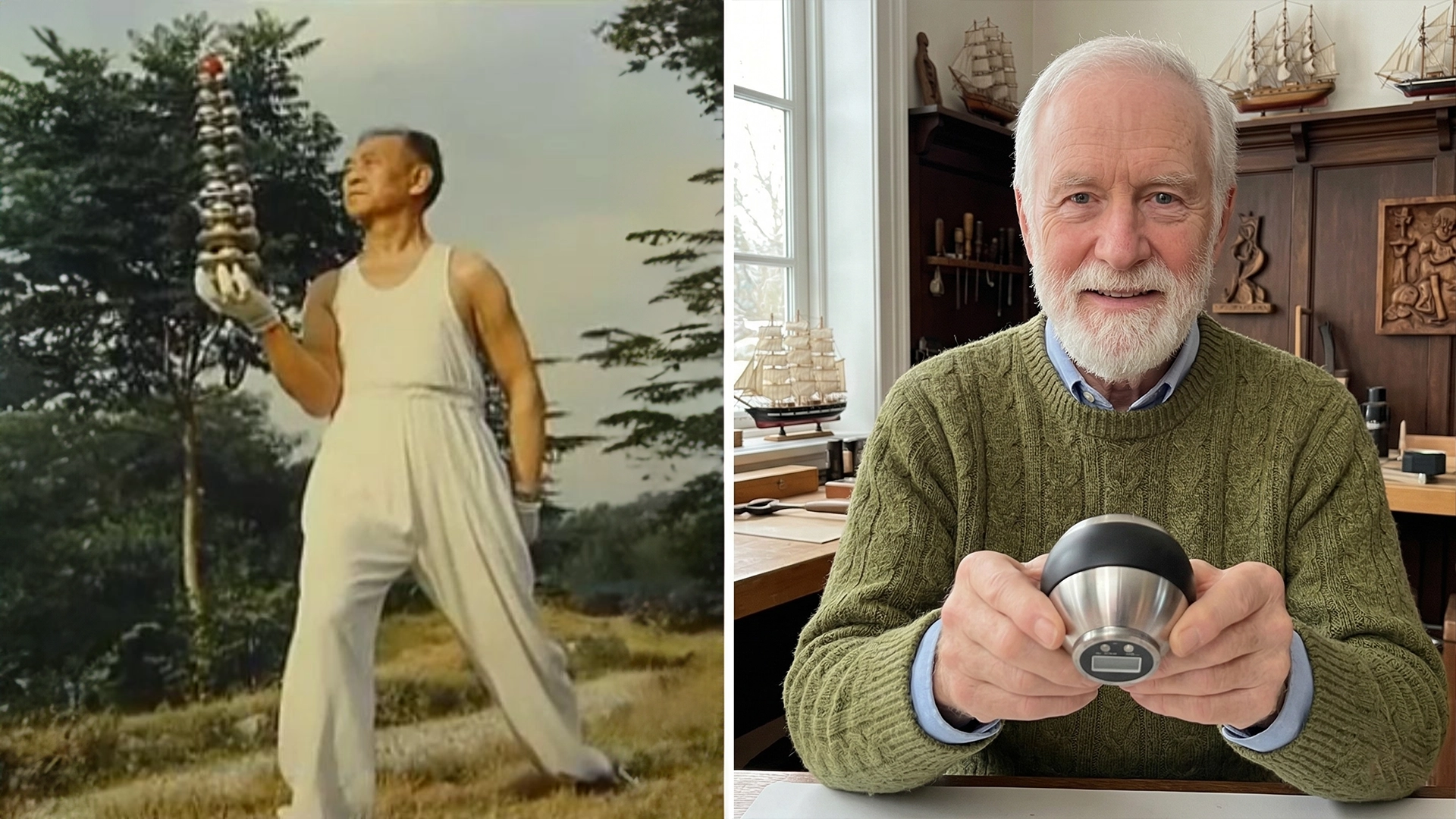
Every week, I sit across from families and have the same conversation.
It starts the same way every time: a forgotten name at Sunday dinner. Misplaced keys. A question asked three times in the same hour.
“It’s just part of getting older,” I’d reassure them.
I believed that for decades.
Then it happened in my own family — and I stopped believing it.
My father, a carpenter with hands that had built our family home board by board, stood in our kitchen one afternoon staring at his granddaughter with a look of quiet panic.
Most people never connect what’s on their plate — or in their cup — to what’s happening in their mind. But research now suggests that certain everyday foods and popular beverages — particularly those high in refined sugars, artificial additives, and ultra-processed ingredients — may quietly interfere with the brain’s ability to maintain focus, recall, and mental clarity over time. Highly refined breads made from processed white flour, for example, are among the most commonly consumed foods linked to rapid blood sugar spikes — a pattern that, over time, researchers have associated with increased mental fatigue and difficulty sustaining focus.
What’s equally striking is the other side of that equation. Certain whole foods have been consistently associated with supporting healthy brain function as we age. Eggs are one of the richest dietary sources of choline — a nutrient involved in the production of acetylcholine, a neurotransmitter critical for memory and learning. Bananas provide potassium and vitamin B6, both of which play a role in supporting healthy nerve signaling and the synthesis of neurotransmitters like serotonin and dopamine. Honey — particularly raw, unprocessed honey — contains natural antioxidants and polyphenols that researchers have studied for their potential role in reducing oxidative stress in brain tissue. And whole grain breads, rich in B vitamins and slow-releasing complex carbohydrates, offer a steady source of glucose to the brain — the kind that supports sustained mental energy rather than the crash that follows refined alternatives. That’s part of what made my findings in Japan so striking. Because the contrast wasn’t just genetic. It was lifestyle. And one overlooked habit, in particular, made all the difference.
”I’m sorry, sweetheart,” he whispered. “It’s right there. I know it’s right there.”
He couldn’t remember her name.
I had spent fifty years in geriatric medicine. I understood cognitive aging better than most. But watching my father — that sharp, precise, detail-oriented man — struggle to retrieve the name of a child he adored... something shifted in me.
I wasn’t ready to accept this as inevitable. Not for him. Not for anyone.
Around that time, I came across data that genuinely surprised me.
Japanese adults, on average, maintain measurably sharper cognitive function well into their later years compared to their Western counterparts. The gap is significant — nearly a decade, according to some longitudinal studies.
The standard explanation pointed to diet: fish, green tea, fermented foods.
But that felt incomplete to me. Diet alone couldn’t account for the full picture.
The Discovery That Changed Everything

So I secured a research grant and flew to Japan to find out what was being missed.
For the first few days, I followed the expected trail — nutritionists, dietary researchers, traditional medicine practitioners. All interesting. Nothing new.
Then, on the fourth day, in a quiet corner of a community centre in Kyoto, I saw something that stopped me cold.
An elderly man — 92 years old, as I’d later learn — sat completely still, manipulating two smooth metal spheres between his fingers with the fluid precision of a concert pianist. Eyes half-closed. Completely focused.
His name was Takeshi.
He lived alone. Second-floor apartment, no lift. Prepared his own meals. Maintained a garden. Taught calligraphy to local children twice a week.
I asked the centre director if he’d always been this mentally sharp.
”Oh yes,” she said, nodding. “Many people here maintain their clarity well into their 90s.”
The next morning, I went back and asked Takeshi directly about his routine.
He looked at me like the answer was obvious.
”Strong hands, strong mind,” he said.
The Science Behind the Connection

As a physician, I knew about the hand-brain connection.
I had simply never appreciated just how powerful it was.
Here’s what the anatomy tells us: each hand contains 34 muscles, 27 bones, and more nerve endings directly connected to the brain than your arms, legs, and back combined.
When hands stay active and engaged, they continuously send signals through these neural pathways — helping maintain the connections that support memory, recall, and cognitive function.
When hands go idle, those signals slow down. The pathways weaken from disuse.
What if this wasn’t just a symptom of cognitive aging — but a contributing factor to it?
I thought about my father. His carpenter’s hands — once precise instruments of craft — now resting useless in his lap for most of the day.
Takeshi’s practice was working. But Baoding balls took years to master. My father needed something he could start using immediately, with measurable feedback, that would keep his hands — and his neural pathways — consistently active.
That question sent me from physician to, somewhat reluctantly, inventor.
That’s When I Created the NeuroBall
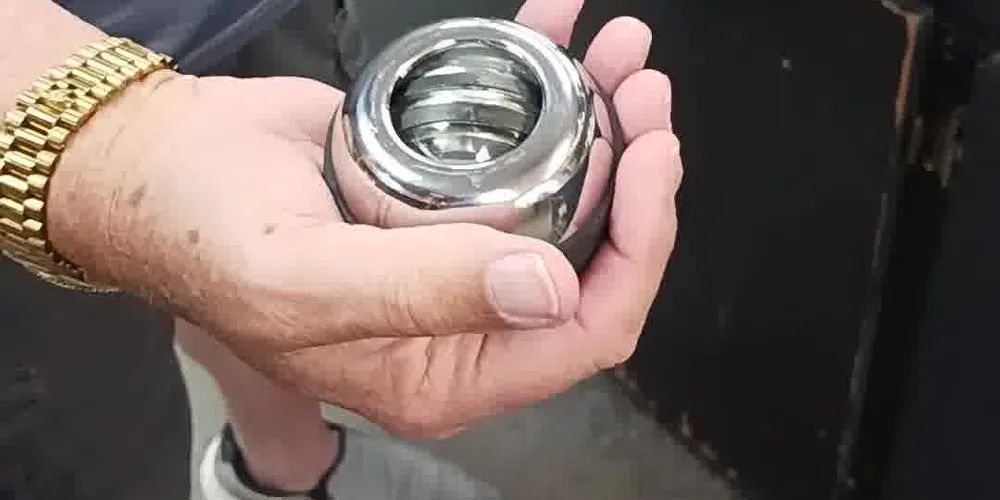
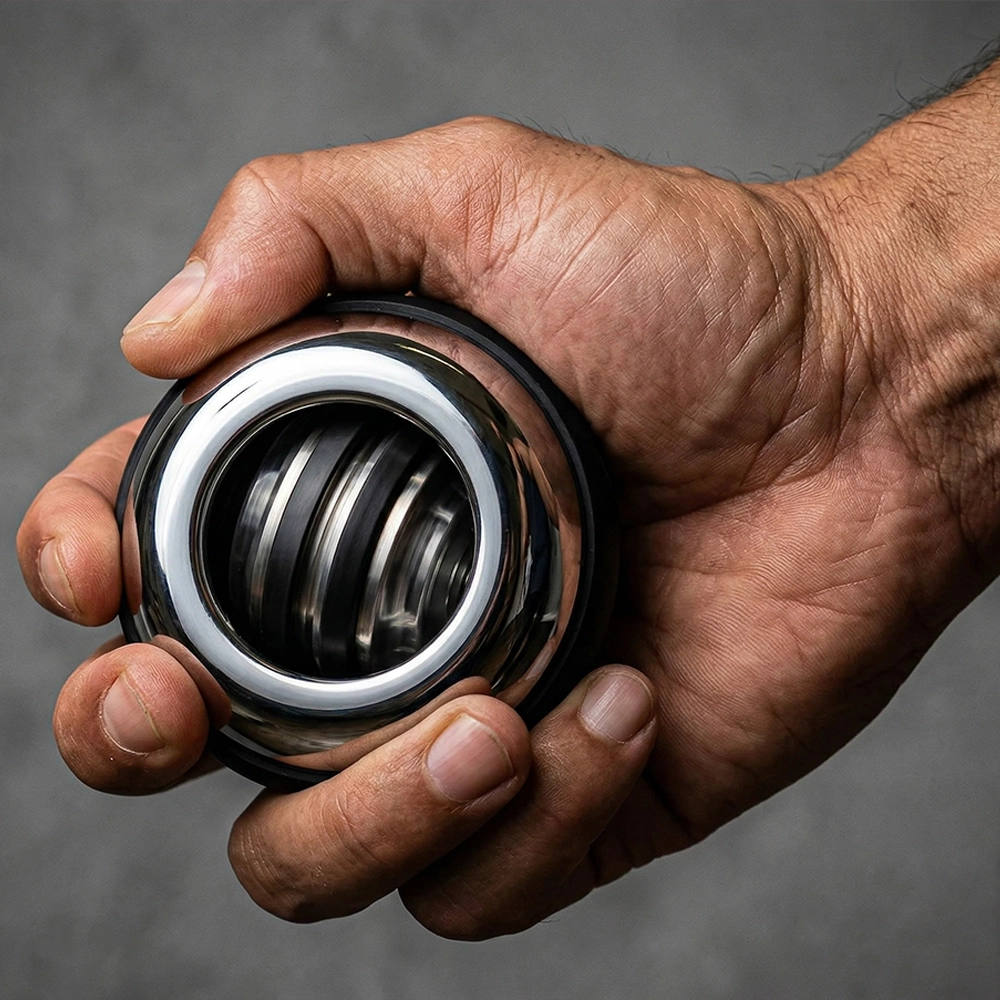
What I created fits in the palm of your hand.
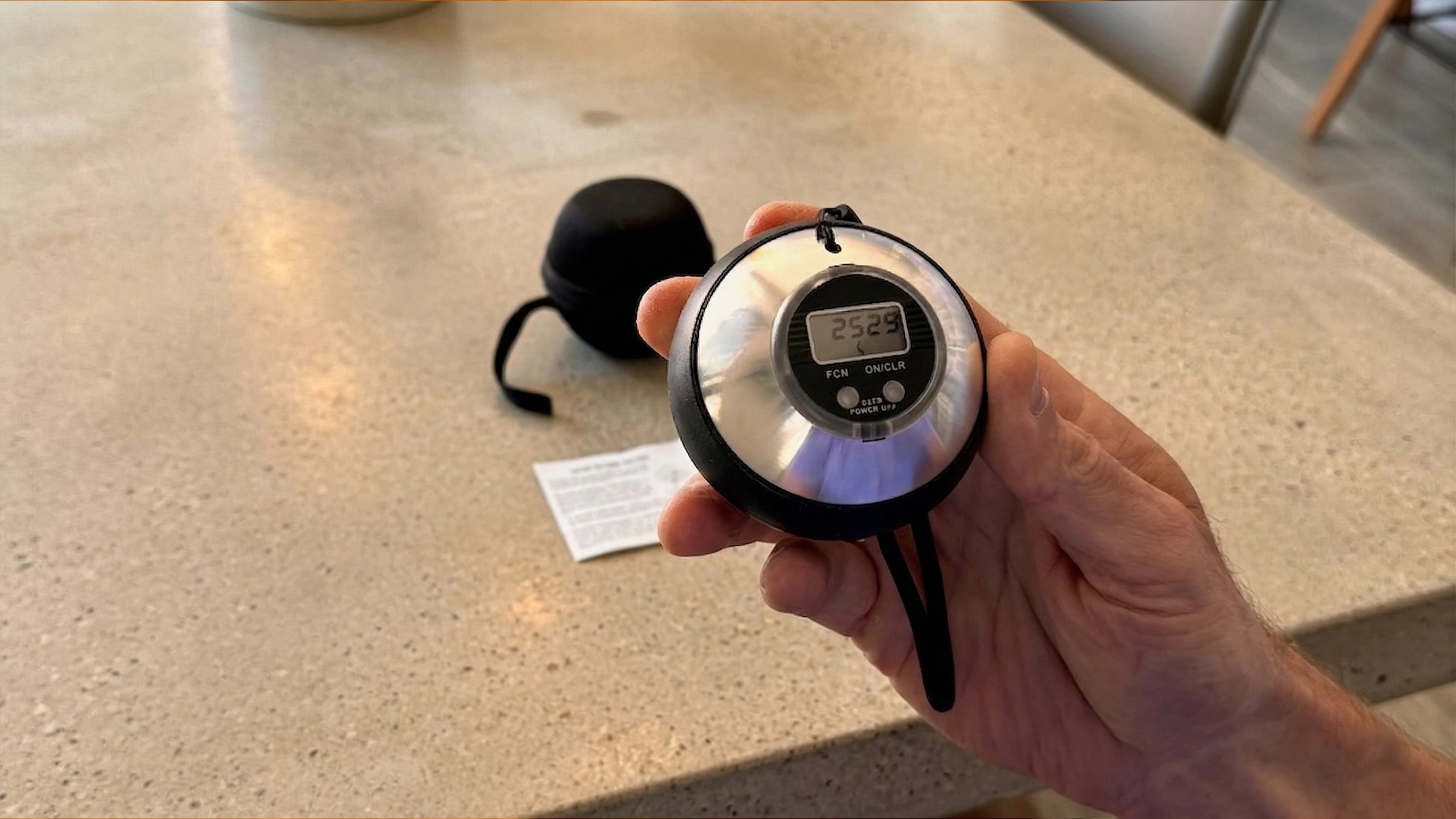
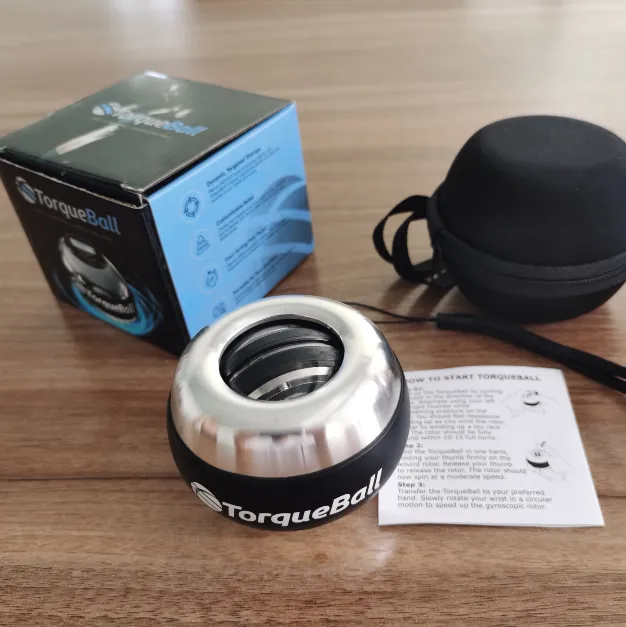
The NeuroBall looks deceptively simple from the outside. But inside is a precision-calibrated gyroscope that generates dynamic, variable resistance — resistance that adapts to your hand’s movement in real time.
Unlike squeezing a stress ball (which activates roughly 3 muscles) or standard grip exercises (5 to 6 muscles), the NeuroBall’s rotational resistance engages all 34 muscles in sequence — continuously, unpredictably, and in a way that keeps the brain actively involved in every motion.
A small LCD screen tracks your rotation score in real time.
That number matters more than it might seem.
It’s not just measuring hand speed. It’s a daily, visible record that your hands are working — and that the neural pathways connecting them to your brain are being regularly activated.
My father’s first session score: 1,120 rotations.
"That’s embarrassing," he said.
"That’s a baseline," I told him. "Tomorrow will be better."
My Father’s Journey Back to Clarity
It was.
Day 3: My mother called. “He won’t put that thing down. Score’s already at 1,450.”
Day 7: Score hit 1,895. Dad met me at the door. “You’re early,” he said — and checked his watch. He was right. I’d told him two o’clock, three days ago. He’d remembered.
Day 10: “He’s answering Hard Quiz questions before the contestants,” my mother reported, almost whispering — as if saying it too loud might break the spell.
Day 21: Score: 3,200. I found him in the garage labeling his tools. In his own handwriting. “If I don’t write it down while I remember where everything goes, I’ll forget again,” he explained.
The planning was back. The self-awareness was back.
Day 42 is the day I won’t forget.
I walked into the garage and froze.
Dad was bent over his workbench, applying a finishing coat to a piece of oak. His hands — those hands that had been sitting idle for two years — moved with smooth, unhurried precision.
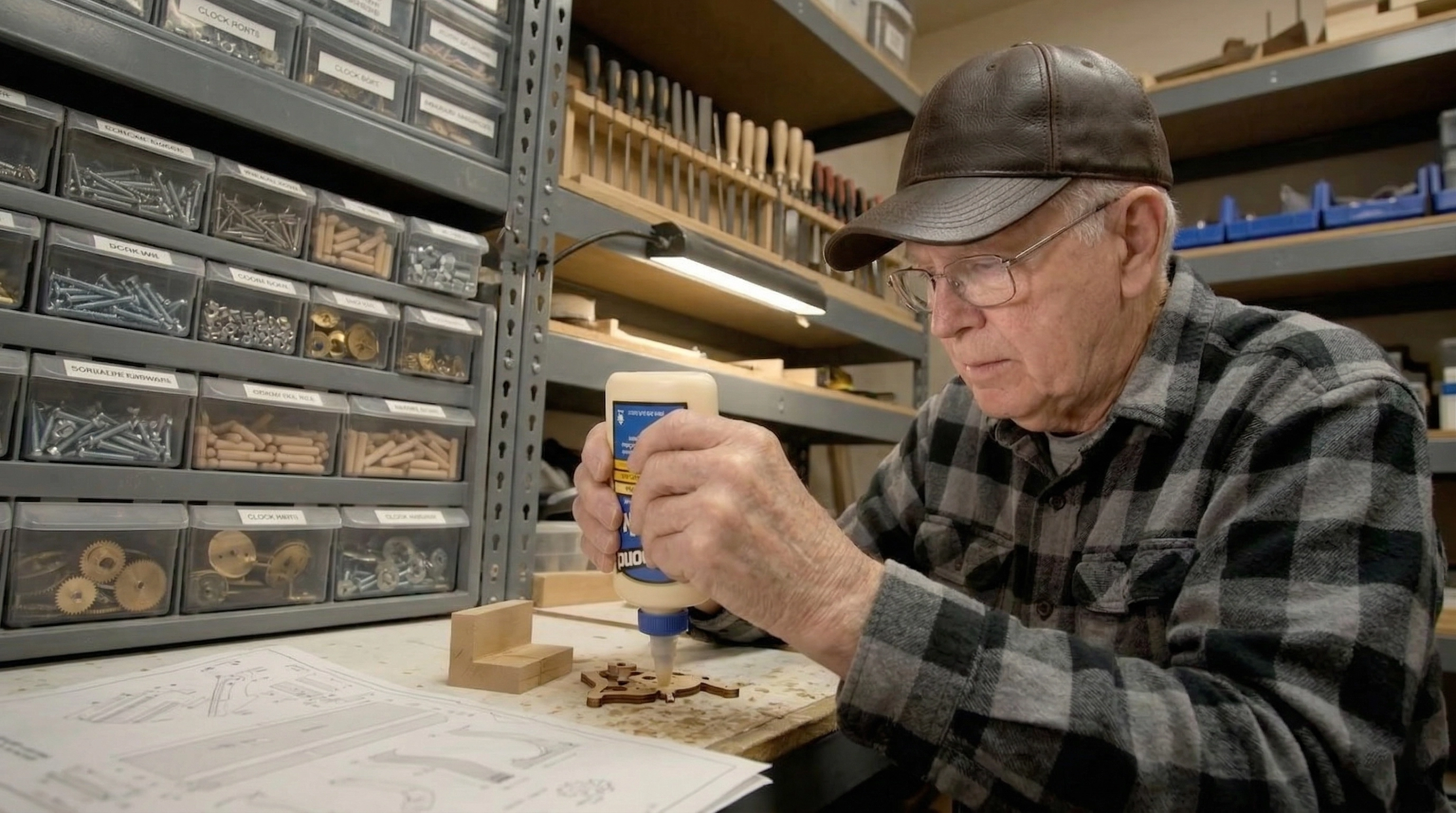
“Making a birdhouse for the Johnsons,” he said without looking up. “They’ve got honeyeaters nesting. Sugomel niger — same species that nested in our yard in ‘68. You were seven. We watched the eggs hatch together.”
The Latin name. The year. My age at the time.
Details I had barely remembered myself.
His score that day: 8,954.
But the number didn’t matter. The memory did.
The Science Behind the Magic
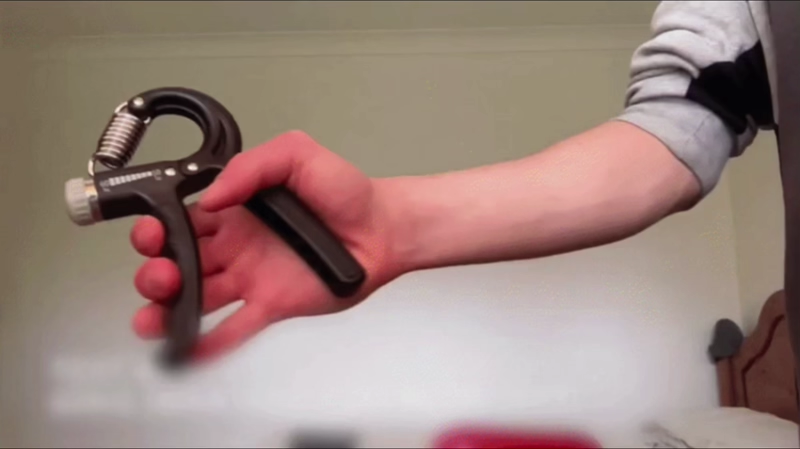
Unlike squeezing a stress ball (which activates roughly 3 muscles) or standard grip exercises (5 to 6 muscles), the NeuroBall’s rotational resistance engages all 34 muscles in sequence — continuously, unpredictably, and in a way that keeps the brain actively involved in every motion.
A small LCD screen tracks your rotation score in real time.
That number matters more than it might seem. It’s not just measuring hand speed. It’s a daily, visible record that your hands are working — and that the neural pathways connecting them to your brain are being regularly activated.
When hands stay active and engaged, they continuously send signals through these neural pathways — helping maintain the connections that support memory, recall, and cognitive function.
When hands go idle, those signals slow down. The pathways weaken from disuse.
The NeuroBall’s gyroscope generates dynamic, variable resistance — resistance that adapts to your hand’s movement in real time, keeping all 34 muscles engaged in sequence.
What Others Noticed
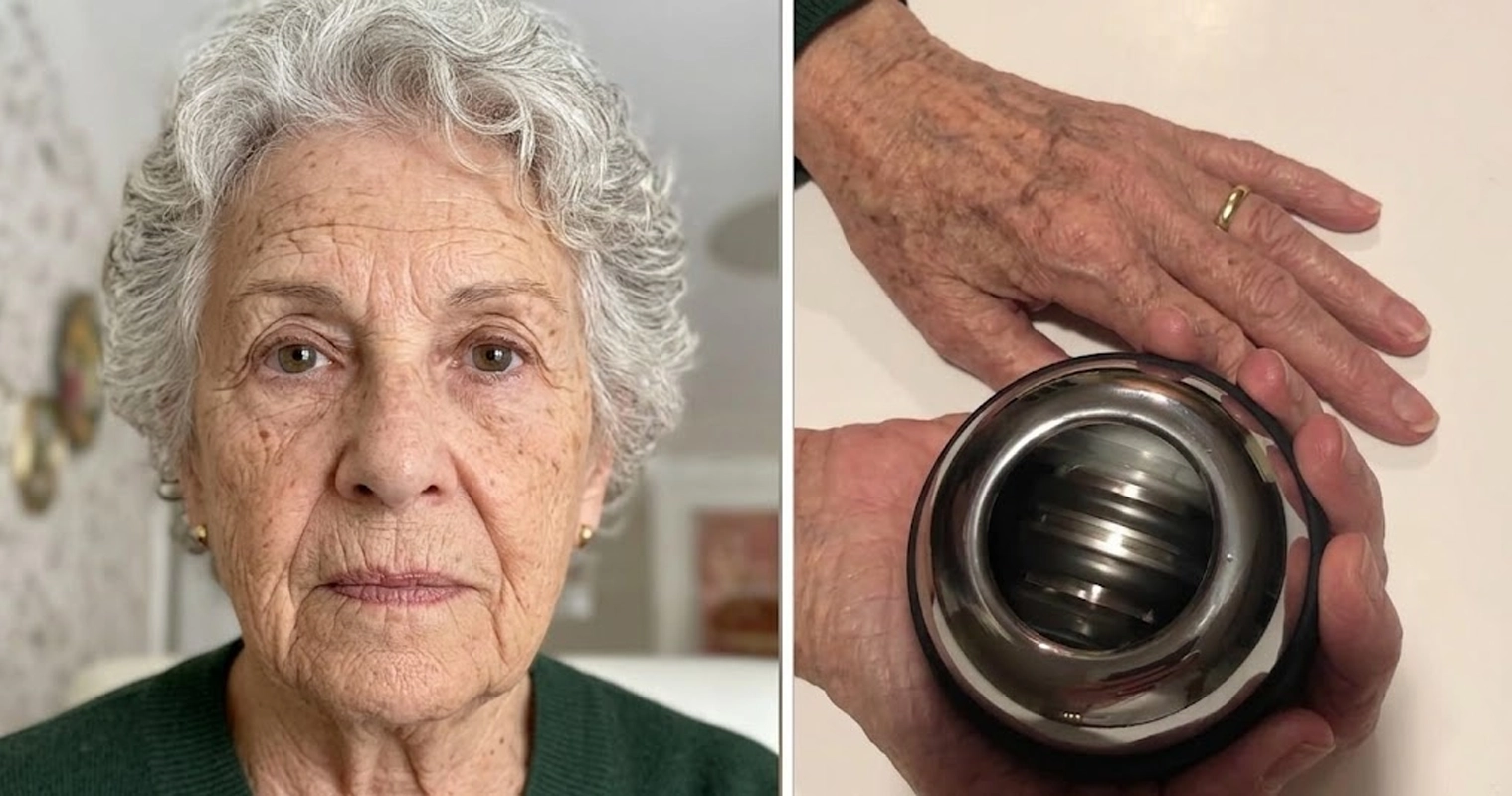
Word spreads quickly in a small medical practice — especially when a 97-year-old shows up driving himself, remembering everyone’s name, after two years of concerning lapses.
I started lending out early prototypes. Here’s what I heard back:
Margaret Wilson, 76, former executive: “My daughter had started touring care facilities ‘just to look.’ Three weeks after I started using the NeuroBall, something shifted. My hands felt steadier. My mind felt clearer. Conversations stopped looping. I hosted my book club last month — twelve people, three hours of discussion — and I remembered every detail. My daughter quietly stopped scheduling those tours.”
Richard Weisman, 83, retired photographer: “When your hands aren’t reliable, nothing feels reliable. I’d been a photographer for sixty years and my hands were starting to let me down. Six weeks with the NeuroBall made a meaningful difference. My hands steadied first. Then my focus sharpened. Last Tuesday I shot a hummingbird at 300mm. In flight. My grandson has it as his phone wallpaper.”

Patricia Martinez, 68, business professional: “I started keeping excessive notes during meetings because I didn’t trust my recall anymore. Two months with the NeuroBall and I caught myself citing numbers from memory — no notes. My assistant looked at me like I was a different person. I nearly cried in the parking lot.”
An Important Note
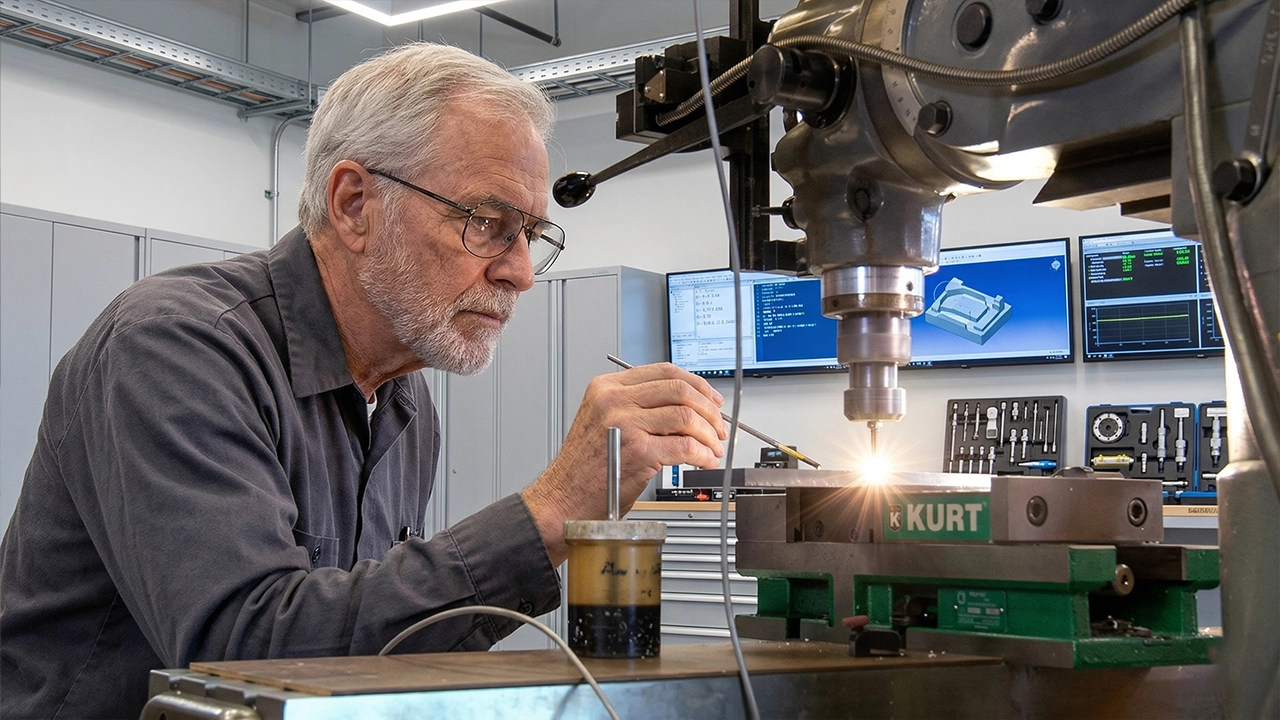
Please note: The NeuroBall is a hand exercise device designed to support physical grip strength and promote regular hand activity. It is not a medical device and is not intended to diagnose, treat, cure, or prevent any medical condition. If you have concerns about your cognitive health or that of a loved one, we always encourage you to consult a qualified healthcare professional.
My “Prove Me Wrong” Guarantee
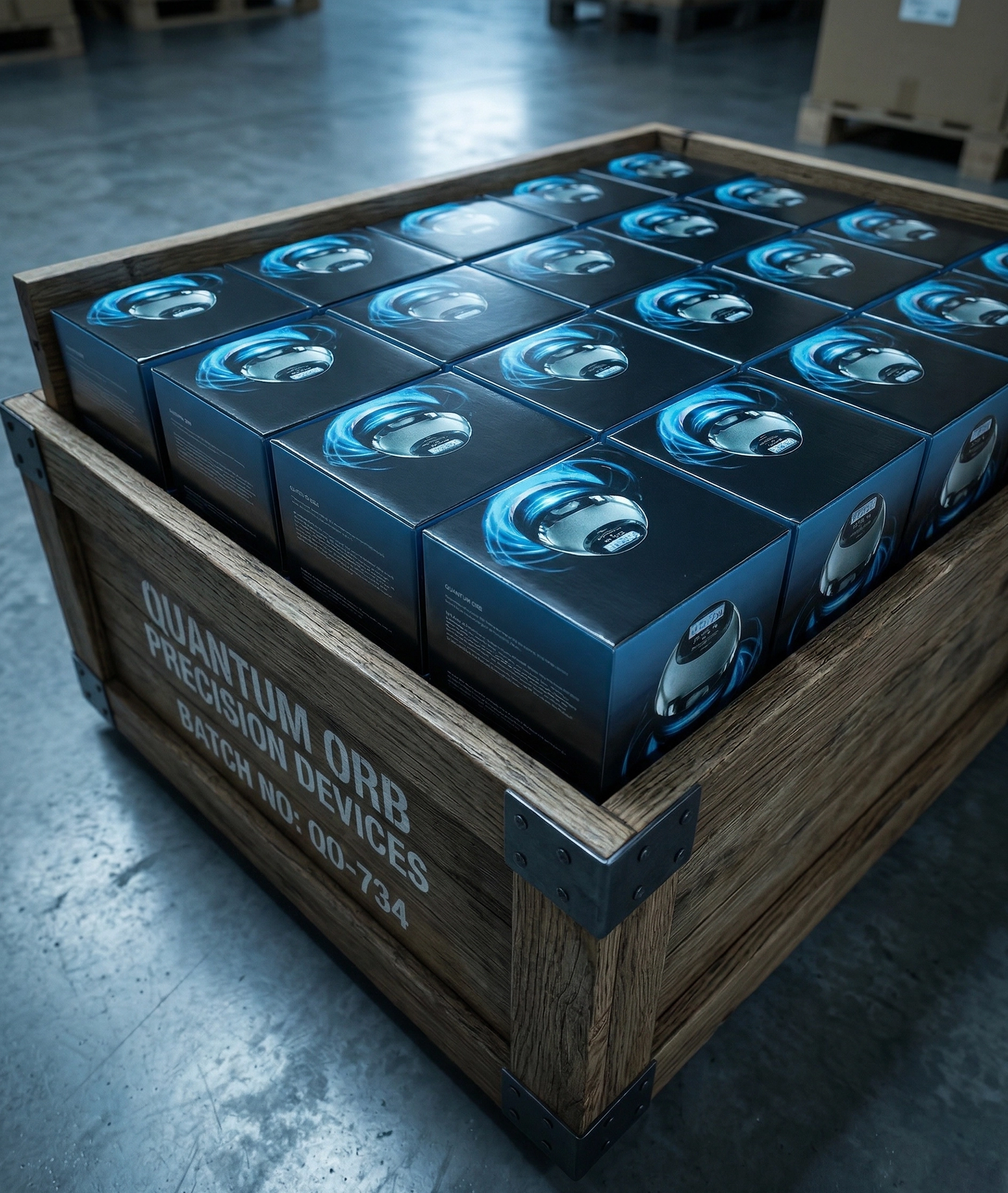
I know you may be skeptical. You should be — there are a lot of empty promises in this space.
That’s why I’m making this completely risk-free.
The NeuroBall is $79. But think of it as a fully refundable deposit.
Use it for 5 minutes a day for 90 days. Watch the number on the screen. Notice how your hands feel. Notice how your mind responds.
If you don’t notice a meaningful difference in your grip, your hand strength, and your daily mental sharpness — email us. We’ll refund every cent. No questions. No return required.
The return rate is under 1%.
It works. And I’m willing to stake the full cost of the product on your experience.
The Bottom Line
I think about Takeshi often. Ninety-two years old, teaching calligraphy, living independently, mind present and engaged.
All because someone taught him — decades ago — never to let his hands go idle.
You might be reading this and recognizing something. A name that slipped away. A question asked twice. A sharpness that doesn’t feel quite what it used to be.
Or maybe you’re watching someone you love, and wondering if what’s happening is inevitable.
It may not be.
The connection between active hands and a present mind is real, it’s documented, and it’s something you can act on — starting today, with five minutes and something that fits in your palm.
Guard your hands. They may help guard your memories.
See If NeuroBall Is Still Available >>
About Dr. Samuel Evans

Dr. Samuel Evans, MD, is a board-certified geriatric specialist with over 50 years of experience in senior care. As the Director of the Independence Research Institute and former Chief of Geriatrics at Cleveland Memorial Hospital, he has dedicated his career to helping seniors maintain their autonomy and quality of life. His groundbreaking research on grip strength and cognitive function has been published in leading medical journals including The Journal of Gerontology and Senior Care Quarterly. Dr. Evans regularly speaks at international conferences on innovative approaches to aging and independence, and serves as a consultant for multiple senior care facilities across the United States.
Patient Results
Got Dad the NeuroBall after reading this. He grumbled at first. Now he won’t put it down. Within a few weeks, he stopped asking the same questions on repeat. Started remembering his grandkids’ names again. Best $79 I’ve spent.
- Don C.
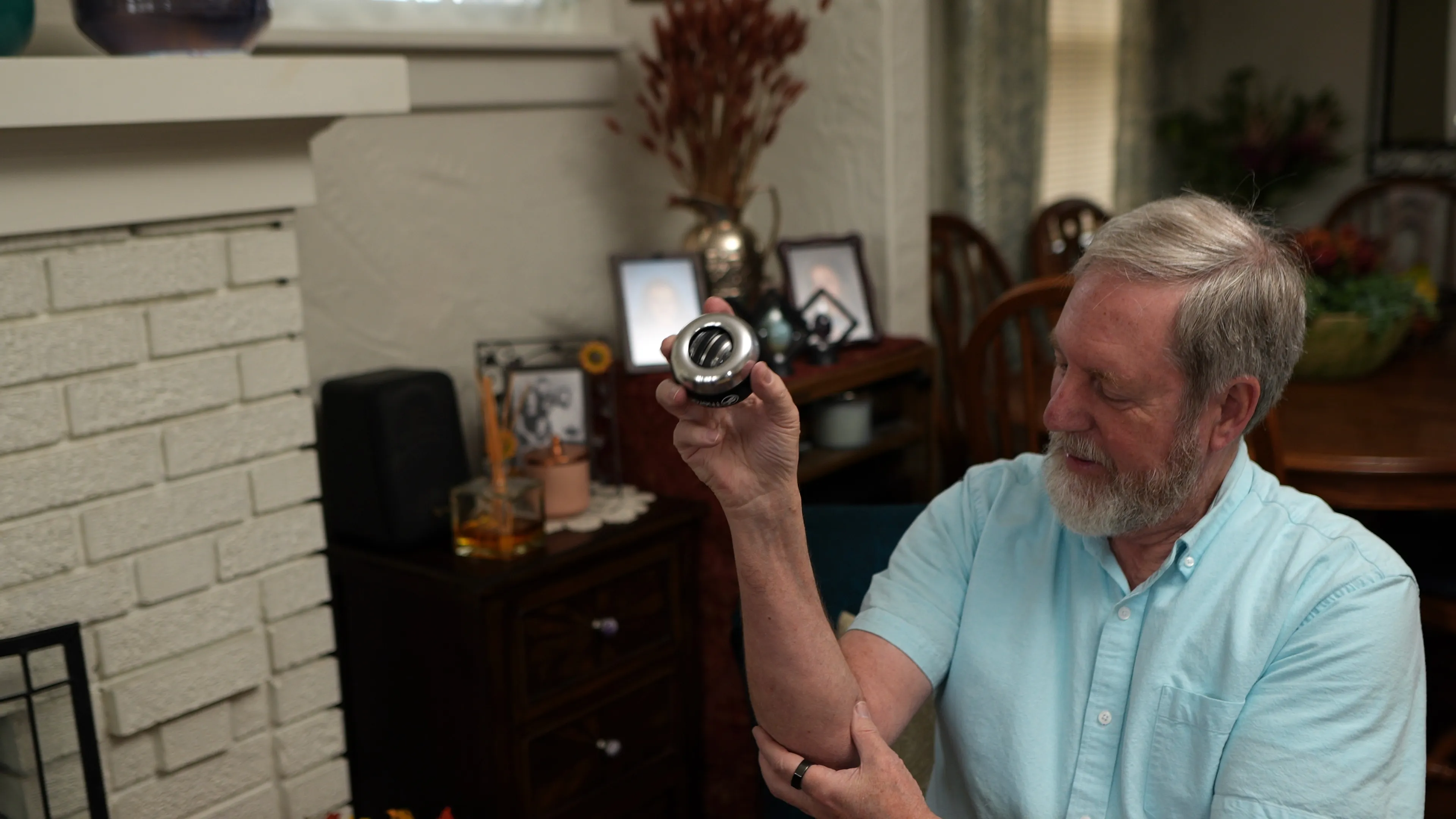
Started at 1,340 (embarrassing). Hit 9,000 last week. My golf buddies noticed I seem sharper. One asked what supplement I was taking. Just this little spinning gadget. Already ordered three more for the guys.
- Benjamin W.
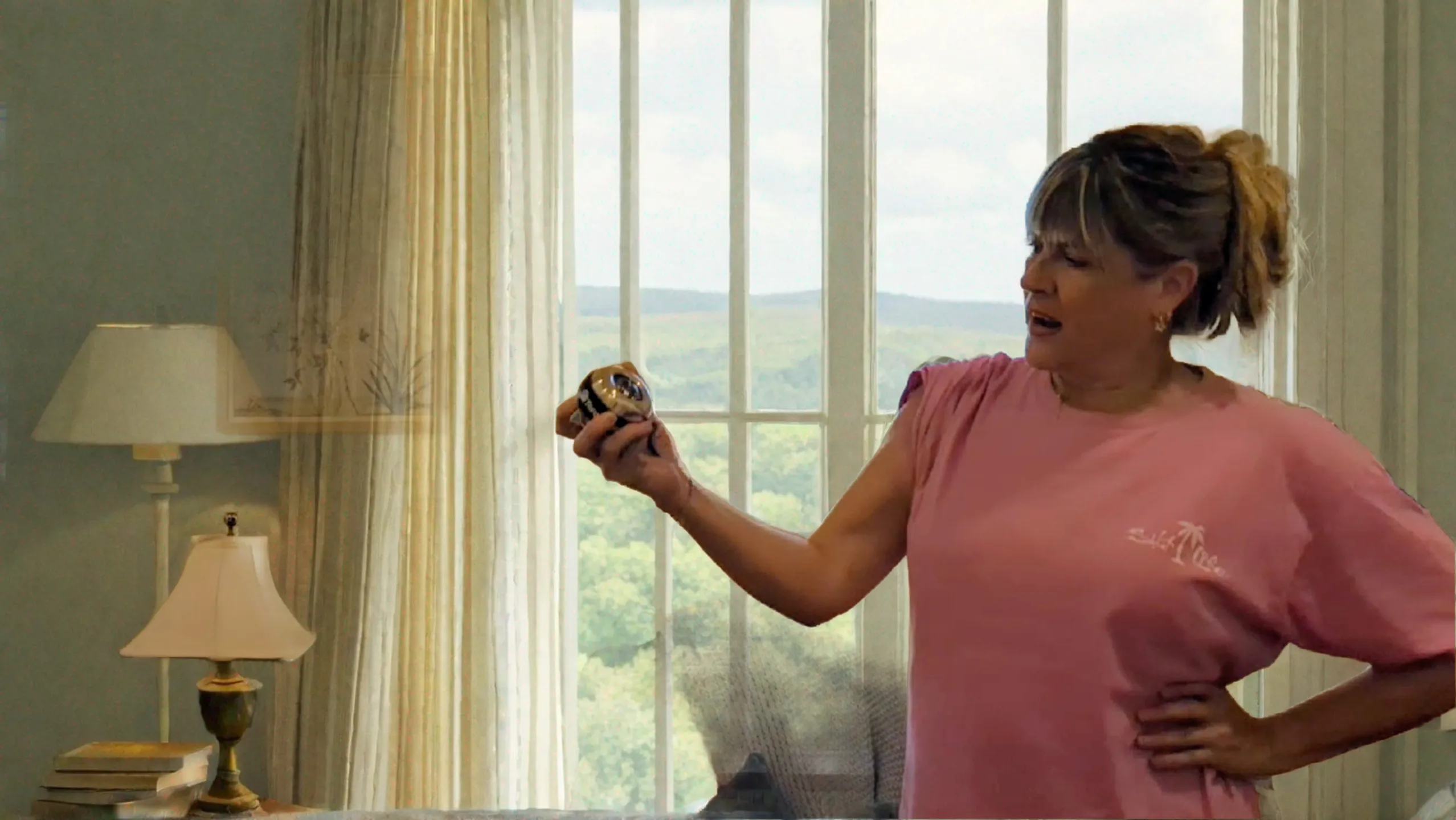
Started using NeuroBall during my morning news shows. Three weeks later, my hands feel stronger and my mind feels noticeably clearer. I remember appointments, conversations, every dose of my medication. Take that, aging.
- Mary K.
Special Pricing Is Limited To Today Only!
Activate a special one-time deal reserved for first-time customers. (As much as 50% OFF)
 Apply Discount & Check Availability
Comments

Wilma Devon
Can anybody vouch for this?
Like · Reply · 4
·
39 min
4
·
39 min

Mary Vernon
Hey... This little ball is fantastico! My hands were constantly aching and stiff. This gadget has taken care of that. This past year I've had awful joint pain from arthritis, plus carpal tunnel flare-ups that made everything from texting to holding coffee cups a nightmare. The NeuroBall works awesome while I'm just sitting watching TV. My grip feels so much better each morning. Hopefully it will help you too!
Like · Reply ·
7
·
16 min

Doris Skylar
I bought mine for the full price and now are 50% off? That's not fair!
Like · Reply ·
4
·
51 min

Skyler Greig
How long does shipping take??
Like · Reply ·
1
·
1 h

Marie Campbell
Hey Skyler, got mine after a week.
Like · Reply ·
2
·
24 min

Leonard Boyd
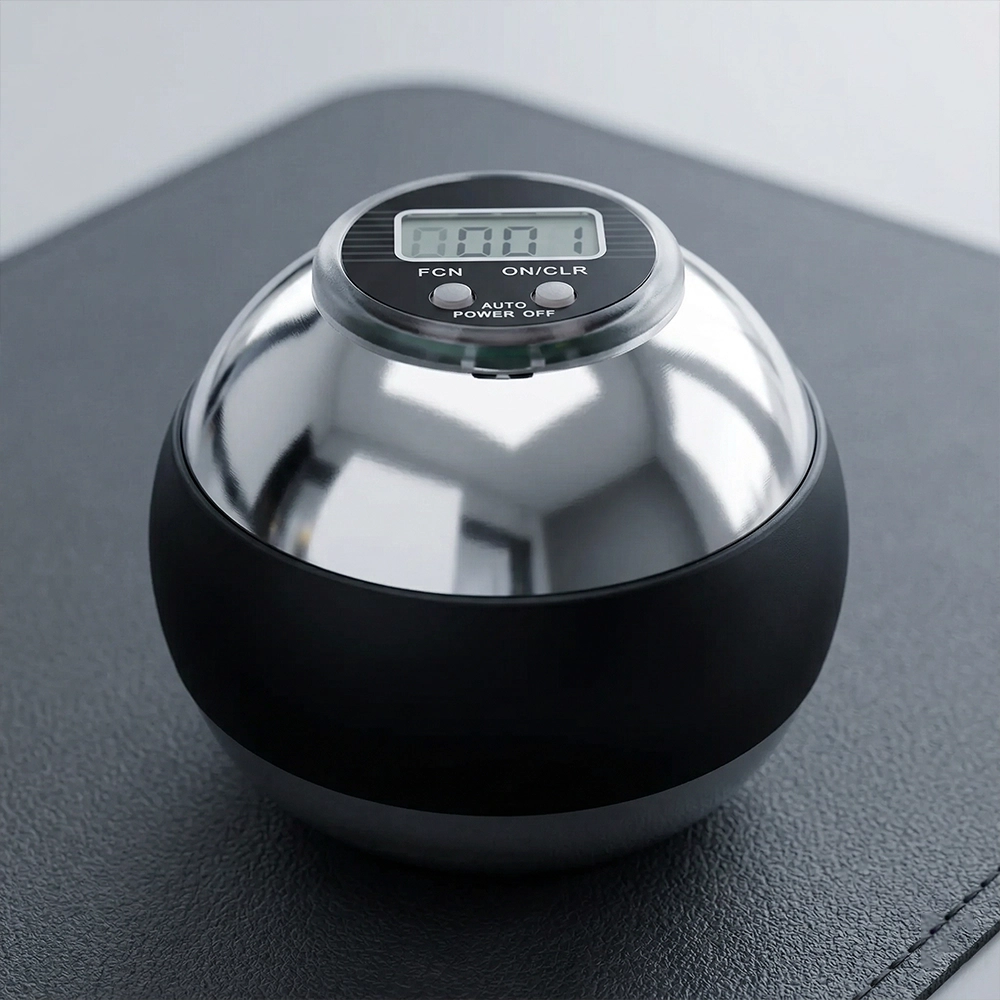
Just got our NeuroBalls in the mail! I bought one for my wife too. It's surprisingly relaxing on my hands - not what I expected from an exercise gadget! I've noticed I don't need to use it every day because just a few times a week keeps my hands feeling strong and flexible.
 Like · Reply ·
6
·
1 h
Like · Reply ·
6
·
1 h

Emma Emerson
Hey Lois, this is what you need instead of the expensive memory supplements
Like · Reply ·
2
·
2 h

Lois Clive
Wow, this is crazy, have ordered one now!
Like · Reply ·
3
·
1 h

Alfred Johnson
Did you buy one, how long does it take to get it
Like · Reply ·
2
·
2 h

Edith Ashton
For me 7 business days.
Like · Reply ·
5
·
2 h

Debra Peyton
Should have bought it sooner - exactly what I needed for my memory problems. Honestly, I can remember names and recall what I did yesterday with barely any confusion now. I've only used the NeuroBall for a few days and my mind feels clearer than it has in years! Haven't forgotten where I put my phone once this week!!!
Like · Reply ·
1
·
3 h

Paula Remington
Wow looks amazing, does anyone actually have one and has it been tested?
Like · Reply ·
1
·
3 h

Sarah Dudley
Yes, I purchased this NeuroBall for my mom. she has to be really careful with her hands. This thing just straight up works. Plus, I love that she can use while relaxing at home watching her shows. Her hands don't shake when she's pouring her coffee anymore! 😏😊
Like · Reply ·
3
·
2 h

Agnes Graeme
I just ordered mine! Cannot wait for it.
Like · Reply ·
4
·
3 h

Barbara Bradly
I want one so bad, I'm gonna buy it this weekend when my paycheck hits lol!!
Like · Reply ·
8
·
3 h

Ethel Dean
Does anyone know how long the shipping takes? Want to buy one for my friend.
Like · Reply ·
1
·
16 min

Clara Milton
Hey Ethel, mine arrived after about a week
Like · Reply ·
2
·
2 h

Emma Shelby
Your friend will be happy! Perfect gift
Like · Reply ·
2
·
1 h

Harry Keegan
Perfect little workout - it's not bulky, so you can take it anywhere, cheaper than those fancy grip strengtheners, does what it says. You'll love how it spins in your palm. Feels natural with all the different ways to use it.
Like · Reply ·
3
·
4 h

Bridget Prescott
Love this rehaber totally!
Like · Reply ·
3
·
4 h

Anna Madison
I was a skeptic... Bought one and was positively surprised. This is worth it. I recently had carpal tunnel surgery (last year) and afterward, my hand was still giving me grief from the nerve issues. But this helped me out a lot. My hand's so much better now. Thank you to the company who made this.
Like · Reply ·
3
·
5 h
Clara Milton
I absolutely love my NeuroBall! Had to get one for my sister today since she won't stop borrowing mine! 😆
Like · Reply ·
2
·
5 h

Kate Orson
OMG I know, I was so happy that they had some left today. Had to get one immediately before they run out of stock again like last time
Like · Reply ·
5
·
2 h

Isabella Mayson
Thank you, our arrived today! Will test it tonight.
 Like · Reply ·
3
·
5 h
Like · Reply ·
3
·
5 h